


Take a breath and relax.
Activate your vagus nerve. Choose a pattern and find your rhythm.




Calm Presets

Sleep Presets
Drift Away

Soft Sleep

Night Drift

Empty Mind

Tension Melt

Balance Presets
Box Breathing

Steady Balance

Alternate Nostril

Focus Presets
Focus Glide
Energy Presets
Power Breathing

What these patterns do to your body.
A longer exhale calms your nervous system via the parasympathetic branch. Your brain receives a signal that there is no immediate threat.
The short hold after inhaling stabilises the rhythm without creating uncomfortable pressure or strain.
Stay in a range that feels comfortable. If you notice dizziness, shorten the session or take a short break.
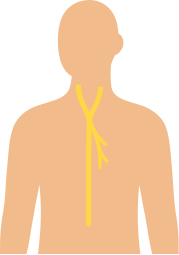
How breathing affects your vagus nerve
The vagus nerve is the main line of the parasympathetic nervous system. It connects brain, heart, lungs and digestive organs. When you breathe slowly with a longer exhale, pressure sensors in the chest and around the heart change their firing rate. That feedback travels along the vagus nerve to the brainstem and shifts your body into a “rest and digest” state: heart rate drops slightly, muscle tone softens and the body reduces stress hormones.
Each full cycle of your pattern (inhale + hold + exhale) gently modulates heart rate. During inhale the vagus signal to the heart is briefly reduced, so the heartbeat speeds up a little. During exhale the vagus signal increases and the heart rate slows again. This small oscillation is called heart rate variability (HRV). Higher HRV is linked to better stress regulation and more flexible emotional responses.
For most people, noticeable changes in vagal tone appear after a few minutes of continuous, relaxed cycles. A common target range is 4–10 minutes, which fits the presets above. If you feel tingling, air hunger or dizziness, shorten the exhale or reduce the total session time rather than forcing the pattern.
Common Questions about Breathwork
The 4-7-8 technique (inhale 4, hold 7, exhale 8) and Box Breathing are widely regarded as the most effective for immediate anxiety relief. They force your mind to focus on counting while physically slowing your heart rate via the vagus nerve.
The vagus nerve is the main controller of your "rest and digest" system. Deep, slow breathing—specifically when your exhale is longer than your inhale—sends a direct signal through the vagus nerve to lower blood pressure and reduce cortisol.
Absolutely. For sleep presets, lying down is recommended. For focus or energy presets, sitting upright allows for full diaphragm expansion, but comfort is the priority.
Consistency beats duration. Practicing a Calm Reset for just 3 minutes once or twice a day is more effective than a single long session once a week.
More tools to help you
Calm Reset